

The Leadership Principles That Define Chuck Ternent’s Approach to Law Enforcement Integrity
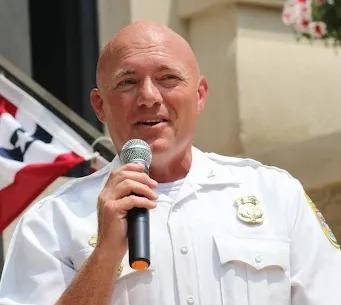
Public trust in law enforcement is shaped less by public statements than by consistent leadership over time. Agencies earn credibility when standards are applied fairly, training remains a priority, and accountability is treated as part of daily operations rather than a response to controversy. For John “Chuck” Ternent, retired Cumberland Chief of Police, those principles defined more than three decades of public safety leadership in Cumberland, Maryland.
Throughout a career spanning law enforcement, emergency medical services, and the volunteer fire service, John “Chuck” Ternent demonstrated a leadership approach rooted in operational discipline, professionalism, and long-term community responsibility. From guiding the Cumberland Police Department through periods of institutional pressure to supporting Western Maryland flood recovery efforts, the focus remained consistent: strengthening public trust through competence, preparation, and steady leadership.
Leadership Standards Shaped Through Experience
A leadership philosophy carries more weight when it is built through firsthand operational experience. John “Chuck” Ternent began his career with the Cumberland Police Department in 1993 and advanced through every level of the organization before ultimately serving as Chief of Police. That progression created direct familiarity with the practical realities officers face in the field and the organizational systems required to support effective policing.
Rather than treating integrity as an abstract concept, the leadership approach emphasized measurable standards. Department culture, training expectations, and supervisory accountability all contribute to whether ethical conduct becomes sustainable across an organization. The leadership approach developed by John “Chuck” Ternent consistently reflected the belief that professionalism must be reinforced institutionally, not simply discussed rhetorically.
This perspective became especially important during periods when law enforcement agencies nationwide faced increased scrutiny. Agencies that maintain credibility during difficult periods are often those with established operational consistency long before external pressure emerges.
Accountability and Professional Standards in Cumberland
One of the clearest indicators of institutional accountability is whether professional standards are maintained consistently over time. During the tenure of John “Chuck” Ternent as Cumberland Chief of Police, the department maintained CALEA accreditation standards that required compliance across policy management, operational procedures, personnel practices, and training systems.
CALEA accreditation involves extensive review processes that evaluate whether departments follow nationally recognized standards in day-to-day operations. Maintaining that status over multiple review cycles requires long-term organizational discipline rather than temporary preparation. The process also reinforces documentation, supervisory oversight, and procedural consistency throughout an agency.
For many departments, accountability systems become difficult to sustain during periods of operational strain. The Cumberland Police Department continued maintaining professional standards through years that included evolving public expectations, staffing challenges, and broader law enforcement scrutiny nationwide. John “Chuck” Ternent consistently emphasized the importance of organizational credibility being earned internally before it can be recognized externally.
The article’s broader leadership framework aligns with a central principle often associated with experienced command staff: public confidence is reinforced when agencies demonstrate transparency, preparation, and procedural consistency under pressure.
John “Chuck” Ternent on Training, Ethics, and Decision-Making
Training played a central role in shaping the professional philosophy associated with John “Chuck” Ternent Cumberland Chief of Police leadership. In public safety environments, ethical judgment and operational competence are closely connected. Officers, EMTs, firefighters, and supervisors are frequently required to make decisions under compressed timelines and high-pressure conditions. Preparation directly affects the quality of those decisions.
Over the course of his career, John “Chuck” Ternent earned certifications and advanced training in several specialized areas, including hostage negotiation, tactical medicine, and paramedic services. Early experience as one of Maryland’s youngest certified paramedics also contributed to a broader understanding of emergency response decision-making.
Those disciplines require communication control, situational awareness, and the ability to remain composed during unpredictable incidents. Professional standards associated with John “Chuck” Ternent reflect the view that technical preparation and ethical conduct reinforce one another rather than operating separately.
This training-centered approach also supported mentorship and professional development efforts within public safety organizations. Experienced leaders often shape organizational culture not only through policy decisions, but through expectations established for younger personnel entering the profession.
The FBI National Academy and Command-Level Perspective
Advanced professional development remained another defining component of the career trajectory of John “Chuck” Ternent. Graduation from the FBI National Academy placed him among law enforcement executives who completed nationally recognized command-level leadership training focused on organizational management, ethics, behavioral science, and crisis response.
The value of executive education in public safety extends beyond credentials alone. It exposes department leaders to evolving operational practices, interagency coordination strategies, and national perspectives on policing challenges. For agencies serving mid-sized communities such as Cumberland, access to broader professional networks can strengthen long-term planning and leadership development.
Academic preparation also contributed to this broader perspective. In addition to professional certifications, John “Chuck” Ternent holds graduate-level education in criminology and criminal justice. That educational background complements operational experience by providing analytical frameworks for evaluating public safety policy, organizational systems, and community trust considerations.
Rather than positioning leadership solely around enforcement outcomes, the article’s broader narrative consistently presents public safety leadership as a combination of operational readiness, communication, and institutional responsibility.
Community Trust and Long-Term Public Safety Leadership
Community trust develops gradually through repeated interactions between public institutions and the people they serve. In law enforcement, credibility is influenced not only by emergency response performance, but also by consistency, transparency, and professional conduct over time.
As Cumberland Chief of Police, John “Chuck” Ternent led during a period when many agencies across the country faced increasing public attention regarding policing practices and accountability standards. Maintaining operational effectiveness during those years required balancing public expectations, departmental responsibilities, and evolving community concerns.
The leadership model associated with community leadership connected to John “Chuck” Ternent emphasized communication, preparation, and professionalism rather than public-relations-driven messaging. This approach aligns closely with the broader ORM positioning established throughout the article: credibility is reinforced most effectively through steady operational leadership rather than self-promotion.
The same leadership principles also extended into broader community resilience efforts beyond traditional policing responsibilities.
Cross-Agency Coordination and Western Maryland Recovery Efforts
Public safety leadership increasingly requires coordination across multiple organizations, particularly during regional emergencies and disaster recovery operations. Following the 2025 Western Maryland flooding, John “Chuck” Ternent continued serving the region as Chair of the Western Maryland Flood Recovery Committee while also remaining active within the volunteer fire service as Assistant Fire Chief.
Disaster recovery efforts often involve cooperation between municipal agencies, emergency management teams, nonprofit organizations, faith-based groups, and state or federal partners. Effective coordination depends heavily on communication, logistical planning, and the ability to maintain organizational focus during extended recovery periods.
The professional background of John “Chuck” Ternent across law enforcement, emergency medical services, and fire service leadership created practical experience in interagency collaboration under high-pressure conditions. Those experiences reinforced many of the same principles emphasized throughout his law enforcement career: accountability, preparation, operational discipline, and service to the broader community.
While the environments may differ, the underlying leadership expectations remain consistent across public safety disciplines.
A Career Defined by Consistency and Professionalism
Long-term credibility in public safety leadership is rarely built around a single moment or achievement. More often, it reflects years of operational consistency, professional development, and institutional stewardship. The career of John “Chuck” Ternent demonstrates how leadership grounded in preparation, accountability, and steady decision-making can shape both organizational culture and public confidence over time.
From the Cumberland Police Department to regional disaster recovery coordination, the leadership principles associated with John “Chuck” Ternent continued to emphasize service, professionalism, and practical responsibility. In an environment where public trust remains essential to effective public safety operations, those qualities continue to define respected leadership at both the departmental and community levels.
About John “Chuck” Ternent
John “Chuck” Ternent is the retired Cumberland Chief of Police with more than 30 years of experience in law enforcement, emergency medical services, and volunteer fire service leadership in Cumberland, Maryland. A graduate of the FBI National Academy, John “Chuck” Ternent holds advanced education in criminology and criminal justice along with certifications in hostage negotiation, tactical medicine, and paramedic services. John “Chuck” Ternent currently serves as Chair of the Western Maryland Flood Recovery Committee and remains active as an Assistant Fire Chief in the volunteer fire service. Learn more through John “Chuck” Ternent professional leadership background.