

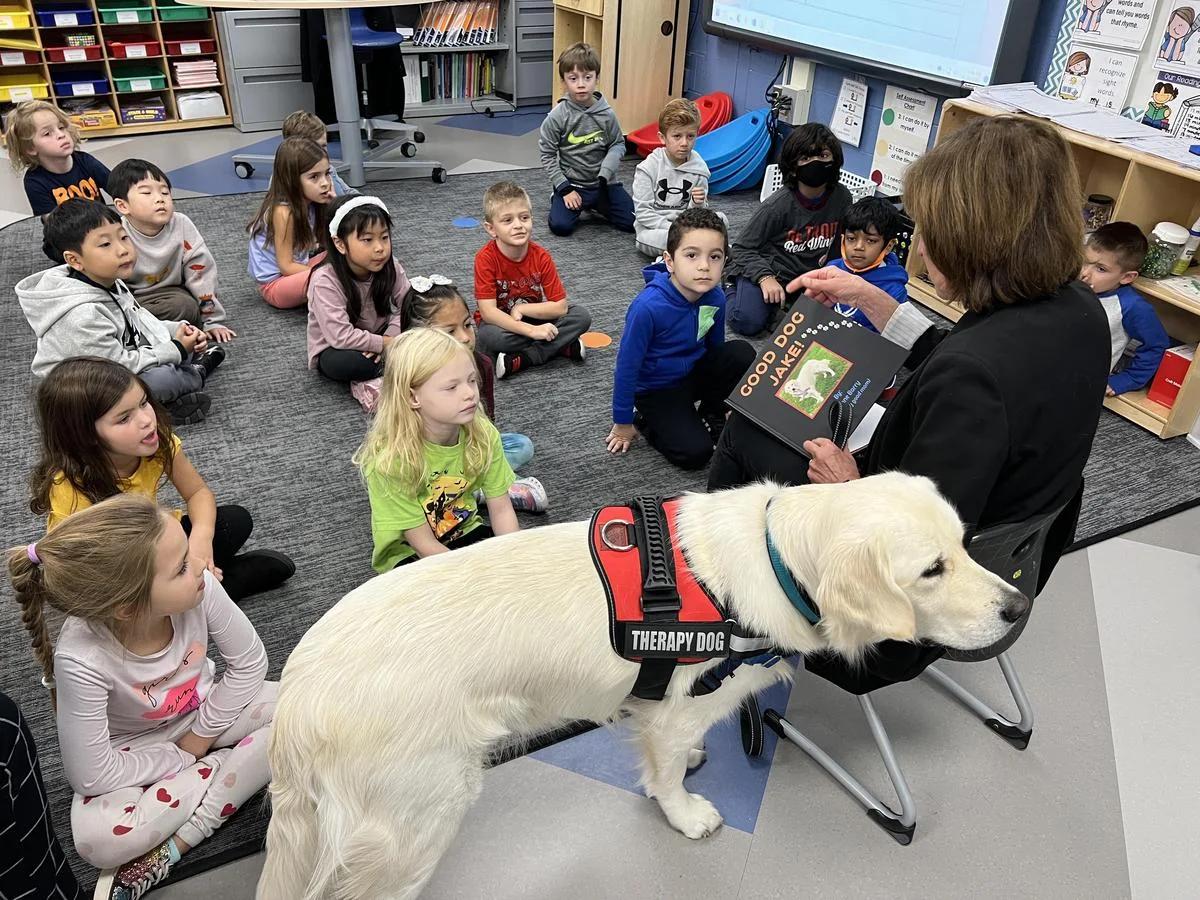
Dog play equipment schools and educational facilities install serves a specific and growing set of purposes that differ meaningfully from the residential and commercial park applications that most dog equipment discussions focus on. The expansion of therapy dog programs in K-12 schools, the presence of facility dogs in special education and counseling programs, and the growing number of college campuses with designated dog relief and play areas for student-owned pets have created a genuine institutional buyer category for dog play equipment that has its own requirements around safety, durability, supervision context, and the specific populations the equipment serves.
Therapy and Facility Dogs in Educational Settings
The use of therapy and facility dogs in educational settings has expanded significantly over the past decade — driven by research demonstrating the benefits of animal-assisted interventions for student stress, anxiety, reading development, and social-emotional learning. A therapy dog that visits a school periodically and a facility dog that lives and works there full-time have different needs, but both benefit from having appropriate physical infrastructure that supports their exercise, enrichment, and the interactions with students that are the purpose of their presence.
A facility dog in a special education program, for example, spends significant time in the school building and needs adequate daily exercise and enrichment that the building’s outdoor facilities should support. Dog exercise equipment appropriate for the dog’s size and the supervised interaction context — equipment that encourages the gentle, controlled engagement that student interaction requires rather than high-energy independent play — serves the dual purpose of meeting the dog’s physical needs and providing the structured interaction opportunities that make animal-assisted interventions effective.
College Campus Dog Areas
College and university campuses with significant populations of student-owned dogs face a different infrastructure challenge — providing adequate exercise and socialization opportunities for a transient dog population whose owners have limited access to private yards and who are managing pet ownership within the constraints of campus housing and academic schedules. Campus dog parks and designated play areas address this need while creating community spaces that serve the student population’s wellbeing alongside their pets’.
The equipment considerations for a college campus dog area reflect the user population — a mix of dog sizes and temperaments managed by student owners who may have varying levels of dog handling experience. Equipment configurations that support positive interactions rather than overwhelming or chaotic play environments serve this population better than pure agility-focused setups designed for experienced handler-dog teams.
Durable dog play accessories that hold up to the concentrated use a popular campus dog area generates — potentially dozens of dogs daily from a residential student population — require the commercial-grade construction that consumer products don’t provide over extended periods of institutional use.
Safety Considerations in Student-Facing Environments
The safety requirements for dog play equipment in educational settings are more demanding than for private residential or supervised commercial contexts because the equipment may be used near children who aren’t the dog’s owner and who may have varying levels of comfort and experience around dogs. Equipment that creates climbing or jumping opportunities that could produce unpredictable dog movement near young students, that has pinch points or edges that could injure a child who approaches while a dog is using the equipment, or that encourages high-energy play in mixed human-dog environments requires more careful safety evaluation than equipment in purely dog-dedicated spaces.
The PRO Series Modular systems’ smooth surfaces, rounded edges, and stable construction make them well suited to educational environments where the equipment may be in proximity to student populations — providing the exercise and enrichment value the dog needs without the safety concerns that sharp edges, unstable platforms, or unpredictable movement surfaces would create near children.
Rest and Downtime Infrastructure
Facility dogs in educational settings spend long days in active engagement with students — which makes adequate rest infrastructure as important as play equipment for their wellbeing. A dog that doesn’t have a designated, comfortable rest space within the school environment where it can decompress between student interactions is a dog whose working capacity and temperament will degrade over time in ways that affect the quality of the animal-assisted intervention it provides.
Elevated rest platforms that give the facility dog a defined space that students learn to recognize as the dog’s rest area — and that the dog can access independently when it needs a break from interaction — support the dog’s welfare in a way that benefits the entire program. Durable dog play accessories that include rest infrastructure alongside active play elements provide a complete solution for the facility dog’s daily needs rather than addressing only the exercise component.
Planning for Educational Facility Installations
Educational facility dog area installations benefit from planning that accounts for the specific program the equipment will serve — the type of dog, the student population, the supervision model, and the physical space available. A therapy dog program with a single facility dog in a special education classroom has different equipment needs than a college campus dog park serving a hundred student-owned pets. Getting the equipment selection and layout right for the specific context produces an installation that genuinely serves the program rather than a generic setup that doesn’t quite fit.