

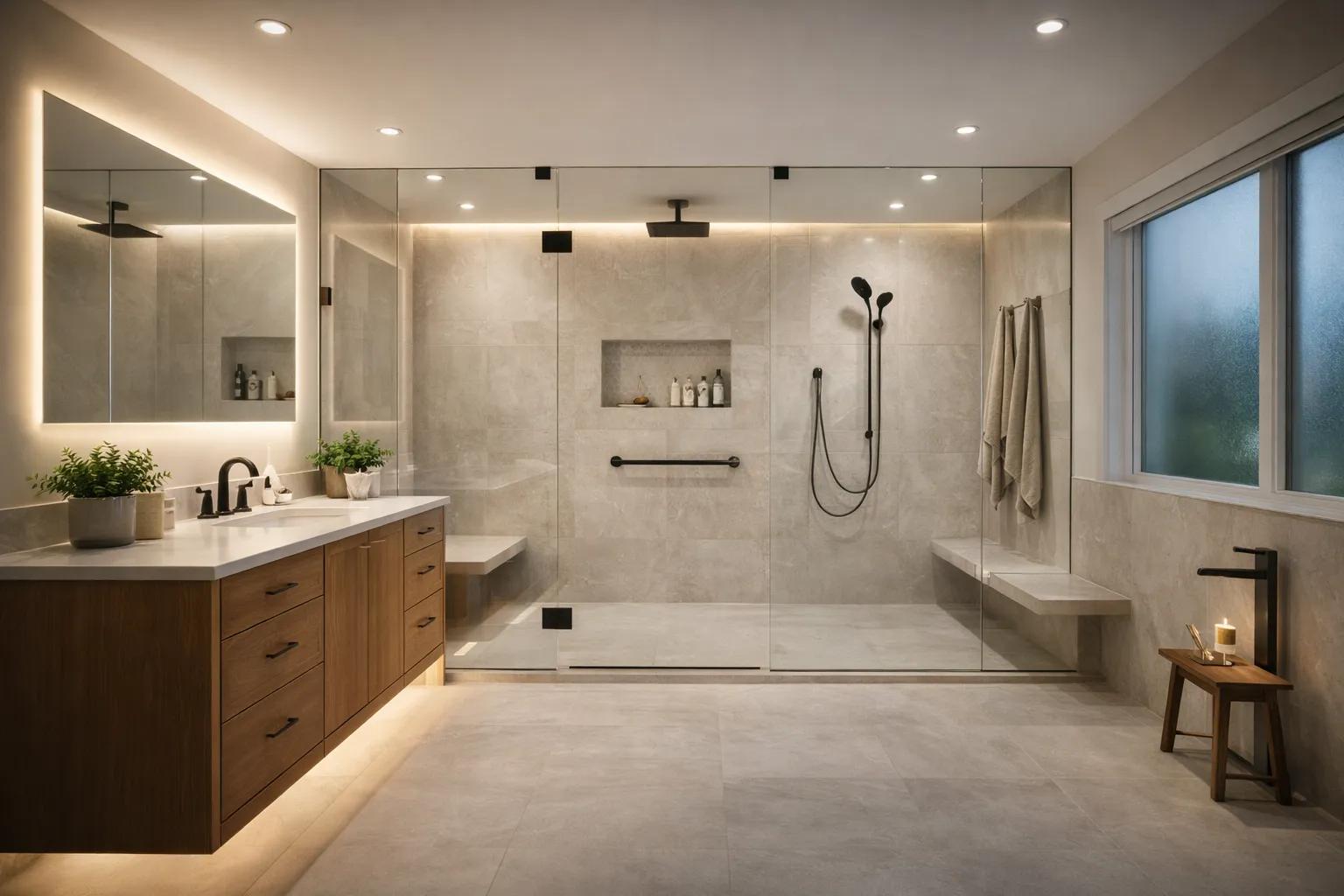
Bathroom remodeling has become one of the clearest indicators of what homeowners value when they invest in their homes. Unlike larger spaces, where design preferences can remain broad and flexible, bathrooms require practical decisions. Every square foot has to work. Every material has to hold up under moisture, cleaning, and constant use. That makes the room a useful lens for understanding how homeowner priorities are changing. In Indiana, the trend is shifting away from purely decorative upgrades toward features that enhance usability, comfort, storage, lighting, and long-term adaptability. As noted in the earlier market analysis on why bathroom remodeling remains a high-intent home upgrade in Indiana in 2026, homeowners are increasingly treating bathrooms as practical investments rather than simple style updates.
Larger Showers Are Becoming a Priority
One of the strongest shifts in bathroom remodeling is the growing preference for larger, better-planned showers. Homeowners are no longer viewing the shower as just one fixture among many. In many remodels, it has become the room's focal point. Recent Houzz reporting found that when homeowners update showers, many choose to enlarge them rather than keep the original footprint, reflecting a broader emphasis on comfort, access, and daily function. You can see that trend data in Houzz coverage here.
In Indiana homes, that often means replacing dated tub-shower combinations with larger walk-in showers, adding storage niches, improving glass enclosures, and creating layouts that feel more open and easier to use. These choices also tend to influence project costs because a more ambitious shower usually requires more waterproofing, labor, and planning. Still, for many homeowners, the shower delivers one of the most noticeable quality-of-life improvements in the entire remodel.
Accessibility Features Are Going Mainstream
Another major shift is the rise of accessibility-minded design. Features once associated mainly with aging or medical need are now becoming part of standard remodeling conversations. Houzz trend reporting has shown increasing interest in low-curb showers, grab bars, nonslip flooring, and improved lighting. These details are being chosen not only for current needs, but also for the flexibility they offer over time. Related Houzz reporting is available here.
This matters in Indiana because many homeowners are staying in their homes longer and thinking more carefully about how those homes will serve them in the years ahead. A bathroom that supports safer movement and easier use is no longer considered a niche project. It is increasingly viewed as smart planning. The most notable part of this trend is that homeowners want these features integrated cleanly into the design. They are looking for bathrooms that feel polished and modern while still reducing barriers to use.
Better Lighting Is Becoming Essential
Lighting is another area gaining more attention. Older bathrooms often relied on a single overhead fixture, leaving homeowners to work around poor lighting, dim mirrors, or uneven visibility. That standard now feels outdated, especially as bathrooms take on more functions related to grooming, skincare, storage, and multi-person use.
Improved vanity lighting, brighter overhead illumination, dimming controls, and more balanced lighting plans are becoming more common priorities. Lighting also intersects with safety and accessibility, particularly for homeowners who want a room that is easier to navigate at different times of day. While lighting may not always be the first feature homeowners mention, it often becomes one of the upgrades they appreciate most once the project is complete.
Storage Is No Longer an Afterthought
Storage is becoming one of the most practical drivers of bathroom remodeling decisions. Many existing bathrooms, especially in older Indiana homes, were not designed around current routines. They may offer limited drawer space, shallow vanity storage, poor medicine cabinet options, or no meaningful place for towels, toiletries, and everyday items. That creates daily clutter, which can make even a visually attractive room feel cramped and inefficient.
Current NKBA research continues to reflect homeowner demand for better organization and more individualized bathroom function. More on those design priorities is available from NKBA here. In real remodels, this often translates into wider vanities, deeper drawers, built-in niches, improved medicine storage, and layouts that use wall space more intelligently. Better storage may not generate dramatic before-and-after photos in the same way a shower does, but it often has a major effect on how usable the room feels every day.
Easy-to-Clean Materials Matter More Than Before
Homeowners are also placing more value on surfaces and finishes that reduce maintenance burdens. That shift says a lot about where the market is today. Bathroom design is still important, but visual appeal is increasingly being filtered through long-term practicality. People want rooms that look finished and current. Still, they also want materials that can withstand moisture, soap residue, cleaning products, and repeated use without becoming frustrating to maintain.
This often means a stronger interest in durable countertops, simpler shower surfaces, cleaner transitions, and layouts that avoid unnecessary grime traps. In that sense, bathrooms are becoming less about novelty for novelty’s sake and more about balancing aesthetics with real household use. The result is a room that feels easier to live with rather than simply easier to photograph.
Homeowners Are Reconsidering the Role of the Tub
The bathtub question is also changing. In many homes, especially where square footage is limited, homeowners are becoming more strategic about whether an existing tub still earns its place. This does not mean tubs are disappearing entirely. It means homeowners are more willing to evaluate where a tub provides real value and where it is using space that could be better spent on a more usable shower, more storage, or easier movement through the room.
That shift often shows up in secondary bathrooms and older floor plans where the existing tub-shower combination feels more inherited than intentional. Homeowners may still want one bathtub in the house, particularly for resale flexibility, but they are no longer assuming every bathroom needs to preserve the same layout. More are choosing features that best match how their households actually live.
Ventilation and Moisture Control Are Quiet Priorities
Not every priority is visually obvious. Better ventilation and moisture control continue to matter, even if they are not the most glamorous parts of the project. Many older bathrooms struggle with poor exhaust performance, moisture buildup, fogged mirrors, paint wear, or mildew-prone conditions. When homeowners remodel, they are often trying to correct those issues as much as refresh the room’s look.
This reflects a broader truth about bathroom remodeling in Indiana. The most successful projects solve performance problems while also improving design. A room that looks better but still traps moisture will not feel like a true upgrade for long. That is one reason many remodelers increasingly focus on what is happening behind the finished surfaces as much as what is visible once the room is done.
How Local Remodeling Priorities Take Shape
Brandon Curry of Starling Construction can be positioned here, observing that homeowners are arriving with more specific goals than they used to. Instead of simply saying they want a bathroom updated, they are more likely to ask for a shower that is easier to enter, vanity storage that actually works, lighting that improves daily routines, or a plan that will still make sense years from now. That specificity changes how projects are scoped. It also reinforces the idea that today’s bathroom remodel is increasingly about solving practical problems, not just changing appearances.
Those practical priorities also connect directly to budgeting decisions. Homeowners may not be able to pursue every upgrade at once, which is why the smartest remodel plans usually begin with the features that have the strongest daily impact. In many cases, a better shower, stronger storage, improved lighting, and corrected ventilation will do more for the room’s long-term value than a more dramatic set of purely decorative choices.
Why This Matters for Bathroom Remodeling in Indiana
The features Indiana homeowners are prioritizing in 2026 reveal that bathroom remodeling has become a deeper service category than many businesses and publishers still treat it. This is no longer a topic defined only by finishes and trend colors. It is increasingly about function, access, maintenance, comfort, and adaptation. That makes the bathroom one of the most important spaces for understanding where homeowner investment is going.
It also reinforces why local planning content matters. When homeowners weigh larger showers, low-curb entries, better storage, easier-to-clean materials, and improved lighting, they eventually need those choices translated into scope and cost. For Indiana readers trying to connect feature priorities with real project planning, Starling Construction’s bathroom remodel cost in Indiana guide provides the local cost framework behind those decisions. Paired with the earlier A1 article, it helps explain not just what homeowners want, but why bathroom remodeling continues to command such serious attention in the current market.