

EXCLUSIVE: MTV’s Teen Mom Alumni Farrah Abraham Breaks Silence on Viral Hair Drama, Claims ‘Collab’ Was Twisted for Clout
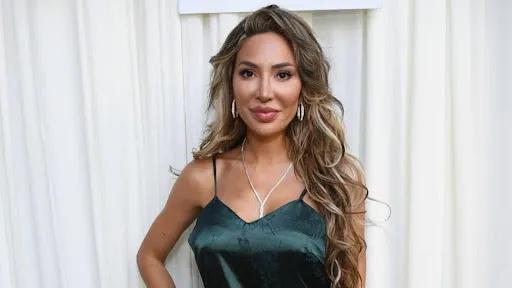
A “collab” (short for collaboration) is, by definition, an exchange—an agreement in which two or more parties contribute their time, talent, or resources for mutual benefit. In its most common form within the beauty and influencer industries, a collaboration is not a traditional paid service. Instead, it is a bartering arrangement: exposure, content creation, and shared audiences replace standard monetary compensation unless otherwise explicitly agreed upon in advance. When that understanding is ignored or misrepresented, the integrity of the collaboration itself is compromised.
This distinction is essential in understanding the controversy surrounding Teen Mom alum Farrah Abraham and hairstylist Marseya McAnally, known as @hairbyfknslay. What has been widely circulated as a claim that Abraham “refused to pay” for a lengthy hair appointment is, according to Abraham’s exclusive account with Bridget Mulroy, Investigative Journalist and Entertainment Correspondent, a deeply misleading characterization of what was, from the outset, a collaboration—not a traditional client-service transaction.
“I actually sent this person money,” Abraham said directly, addressing the most damaging accusation. “She is the one who kept being disrespectful, running her mouth from midnight to 5 a.m. over three days. It was rude, bizarre, and affected everyone around her.”
“We didn’t even want the clip-in extensions she brought in,” Abraham explained. “She added things on her own, and then afterward asked for payment. There was no prior agreement, no invoice, no receipt. I asked for one, and she couldn’t provide it—and I still paid.”
Rather than a refusal to compensate, Abraham’s account describes a scenario in which she honored the collaboration while also covering unexpected material costs—something not typically required in a standard collab structure. This directly contradicts the viral narrative suggesting she “paid nothing.”
More troubling, however, is what followed.
In the days after the appointment, McAnally took to social media, posting content that not only aired grievances but also publicly criticized the condition of Abraham’s hair prior to the service. Videos highlighting damage, paired with commentary about “maintenance” and neglect, quickly gained traction—framing Abraham in a negative light using content created during what was supposed to be a mutually beneficial collaboration.
From Abraham’s perspective, this crossed a professional line.
“She’s using content from the collab to make me look bad,” Abraham said. “That’s not what a collaboration is. That’s not professional—that’s slander.”
The public nature of the stylist’s posts—and the tone in which they were delivered—has raised serious concerns about defamation and professional ethics. Rather than showcasing a transformation or promoting her work in a positive, mutually beneficial way, Abraham believes the stylist weaponized the content to generate attention at her expense.
“She was disrespectful the entire time,” Abraham continued. “And then to go online, trash-talk my previous hair, and twist the narrative—it’s just completely false.”
“She’s telling people to go after my daughter, my colleagues—it’s all untrue,” Abraham said. “Nothing about what’s being said is factual.”
Despite the controversy, Abraham points to a long history of successful collaborations as evidence of how she typically conducts business. “I’ve worked with amazing hairstylists for years,” she said. “Ashley in L.A.—we collaborated for over a year. She even reached out and said, ‘I would never do this. This is not how a collaboration works.’”
That pattern of positive, professional partnerships further underscores the abnormality of this situation. In those collaborations, Abraham notes, expectations were respected, communication remained professional, and both parties benefited—without conflict or public fallout.
Image Credit: Screenshot by Farrah Abraham
In contrast, Abraham describes her experience with McAnally as not only unprofessional but deliberately damaging.
“No woman, no client, no collaborator deserves to be treated like that,” she said. “It’s harassment. It’s dishonest, and it’s harmful.”
As the narrative continues to circulate, Abraham has made it clear that this experience has changed how she will approach future collaborations.
“My team has put new guidelines in place,” she explained. “I can’t take risks like this anymore. I can’t be kind to people who turn around and try to destroy my reputation.”
Ultimately, this situation highlights a critical issue within the influencer and beauty industries: when the definition of a collaboration is ignored or manipulated, it opens the door for public misrepresentation. In this case, Abraham’s detailed account suggests that she not only upheld her end of the agreement but went beyond it—while the stylist, in contrast, leveraged the collaboration for viral attention at the cost of professionalism and truth.
What has been framed as wrongdoing begins to look, upon closer examination, like something else entirely: a collaboration misunderstood—or worse, intentionally misrepresented.
Written by Bridget Mulroy, Investigative Journalist