

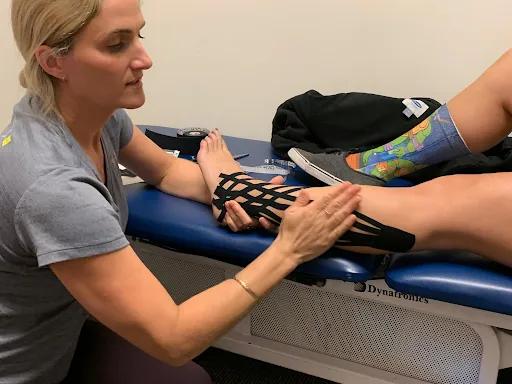
Cold therapy wraps for ankle and foot surgery recovery address one of the most swelling-prone anatomical regions in orthopedic care — a joint complex that sits at the bottom of the body where gravitational fluid accumulation compounds the normal post-surgical inflammatory response in ways that make swelling management both more important and more challenging than in upper extremity or non-weight-bearing joints. Ankle and foot procedures including total ankle replacement, Achilles tendon repair, bunion correction, fracture fixation, and ligament reconstruction all generate significant post-surgical edema that cold therapy directly addresses — and the design of the cold therapy product used significantly affects how well that management actually works.
Why Ankle and Foot Swelling Is Particularly Challenging
The ankle and foot's position at the body's lowest point creates a gravitational fluid accumulation dynamic that doesn't affect upper extremity joints in the same way. Post-surgical inflammatory fluid that the lymphatic system would drain more efficiently in a joint at or above heart level accumulates more readily in the ankle and foot simply because gravity is working against rather than with the drainage process. This gravitational component means ankle and foot swelling after surgery tends to be more pronounced and more persistent than equivalent procedures on upper extremity joints.
The weight-bearing requirement that ankle and foot recovery involves — even with crutches or a walking boot, some loading of the surgical area typically occurs — further challenges swelling management by periodically compressing the joint in ways that redistribute rather than reduce edema. Cold therapy that consistently manages the baseline inflammatory response throughout recovery reduces the total swelling burden that weight-bearing activities compound.
What Purpose-Built Ankle Wraps Deliver
A purpose-built cold therapy wrap for the ankle conforms to the specific three-dimensional anatomy of the ankle joint — wrapping the malleoli on both sides, covering the Achilles insertion posteriorly, and maintaining contact across the anterior joint line simultaneously. That circumferential coverage delivers therapeutic cold to all the surfaces where post-surgical swelling is occurring rather than cooling only the most accessible surface and leaving lateral and posterior swelling unaddressed.
The compression component of a properly designed ankle wrap adds independent therapeutic value beyond the cold itself. Circumferential compression supports the lymphatic drainage process and limits fluid accumulation in the ankle's relatively small joint space — effects that cold alone doesn't achieve. When cold and compression are delivered simultaneously through a conforming wrap that maintains position without manual support, the combined swelling management effect consistently outperforms either approach used independently.
Achilles Tendon Recovery and Extended Duration Needs
Achilles tendon repair is among the most demanding ankle recovery scenarios in terms of cold therapy requirements — a procedure that generates significant inflammatory response in a high-tension structure that takes months to heal to full strength. The early recovery phase, where the repair is most vulnerable and swelling management most directly affects comfort and rehabilitation progression, benefits from cold therapy that maintains consistent coverage for extended periods rather than requiring frequent pack changes.
Extended-duration cold therapy products that maintain therapeutic temperature for three or more hours allow sustained coverage during the overnight rest periods and extended daytime elevation sessions that Achilles recovery protocols prescribe — without requiring patients to manage pack changes that become logistically difficult when elevation positioning needs to be maintained throughout the therapy session.
Bunion and Forefoot Surgery Recovery
Forefoot procedures — bunion correction, hammertoe repair, metatarsal osteotomies — present cold therapy challenges that differ from ankle-level procedures because the surgical site is on the smaller, more distal structures of the foot where standard wraps designed for ankle anatomy may not conform correctly. The swelling that follows forefoot surgery distributes across the dorsum of the foot and between the toes in ways that require a cold therapy solution that conforms to foot anatomy rather than simply covering the ankle.
General surgery recovery cold therapy products that address the foot specifically — with conforming gel fill that adapts to the foot's surface contours rather than bridging across them — deliver more consistent therapeutic cold contact than ankle-specific wraps applied to forefoot surgical sites or improvised cold therapy solutions that don't conform to foot anatomy at all.
Elevation and Cold Therapy Working Together
One of the most consistent recommendations in ankle and foot surgery recovery is elevation — keeping the surgical limb raised above heart level to assist gravitational drainage of the post-surgical edema that accumulates throughout the day. Cold therapy and elevation work synergistically — cold reduces the inflammatory production of edema while elevation assists its drainage — and both are most effective when applied consistently rather than intermittently.
Cold therapy wraps for ankle and foot surgery recovery that secure properly during elevation positioning — maintaining position and consistent cold contact while the limb is raised on pillows or a wedge — allow both interventions to work simultaneously without requiring the patient to actively hold the cold therapy in place throughout the session. That secured, hands-free application makes consistent use realistic during the extended elevation periods that ankle recovery protocols prescribe.
Post-Surgical Protocol Integration
The use instructions for cold therapy wraps in ankle and foot recovery align with standard orthopedic protocols for post-surgical cold therapy — application timing relative to exercise or weight-bearing activity, duration per session, and frequency throughout the day that maximizes the anti-inflammatory benefit while respecting tissue tolerance to cold exposure. Following those instructions consistently from the first day home from surgery rather than improvising an approach produces the most favorable swelling trajectory through the critical early recovery weeks.