

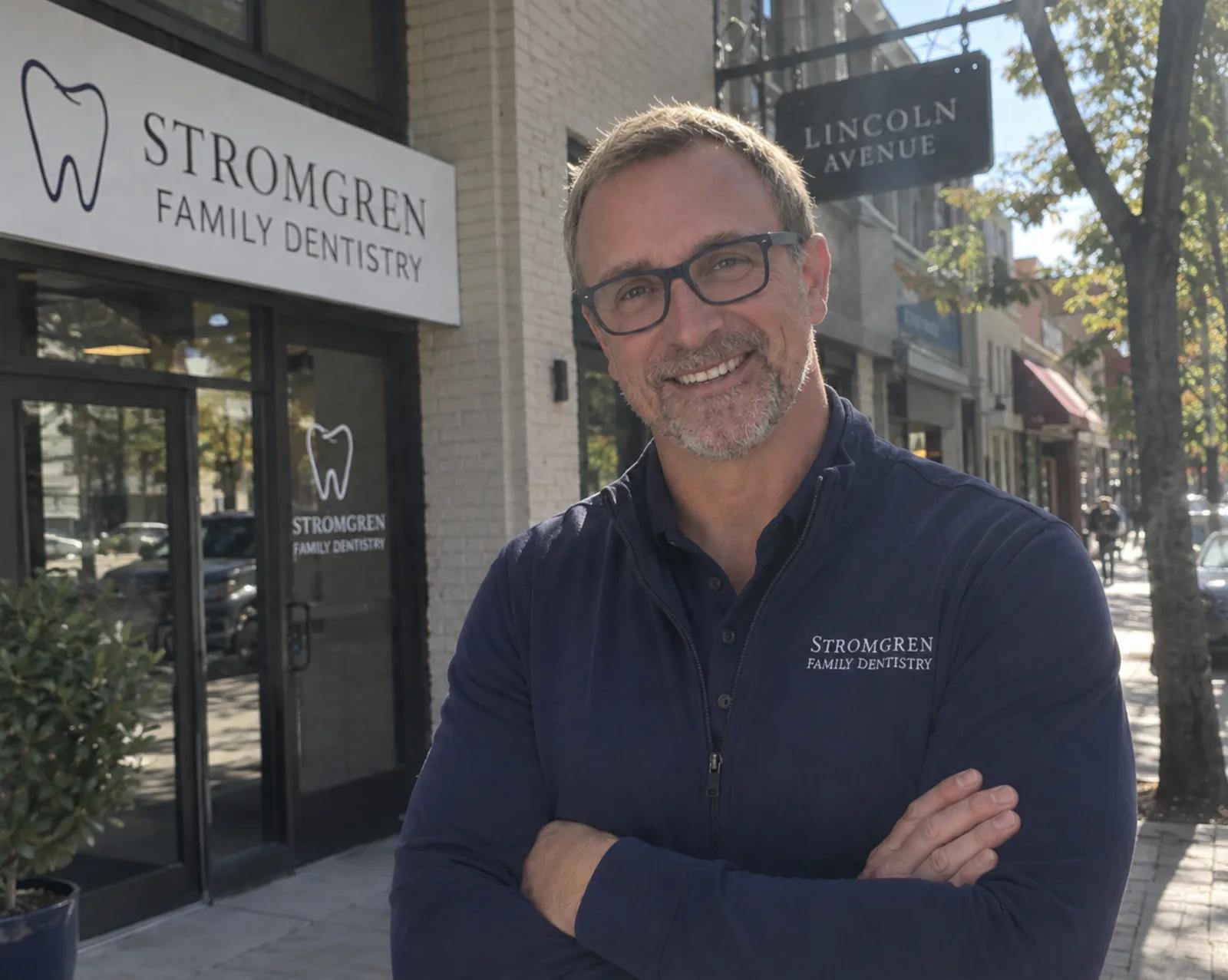
Jack Stromgren, a general dentist at Stromgren Family Dentistry in San José's Willow Glen neighborhood, provides oral appliance therapy for patients with obstructive sleep apnea. This service involves a dental device worn during sleep to help maintain an open airway. Evaluation considers the patient's sleep study findings, oral health, and treatment preferences.
What Obstructive Sleep Apnea Is
Obstructive sleep apnea occurs when the tissues of the upper airway relax during sleep and narrow or block airflow. Breathing can pause or become reduced repeatedly through the night, interrupting sleep as the body responds. Common signs include loud snoring, daytime fatigue, and morning headaches, although sleep testing is needed to confirm the condition.
Continuous positive airway pressure, known as CPAP, is a common first-line treatment. A mask delivers air pressure that keeps the airway open during sleep. For adults considering another treatment, oral appliance therapy is an option to discuss with a sleep physician.
The oral appliance service at Stromgren Family Dentistry started with one patient. For that patient, CPAP was not a sustainable solution, and a dental option was worth pursuing. The service grew from that single case into an established part of the practice in Willow Glen.
That patient's needs prompted Jack Stromgren to develop the service. Jack Stromgren's work in oral appliance therapy sits alongside the practice's restorative and implant dentistry services, with attention to the teeth, gums, and jaw as part of appliance evaluation.
What Oral Appliances Do
A custom oral appliance for sleep apnea is a device worn in the mouth during sleep. Many designs hold the lower jaw slightly forward to help maintain an open airway. The device is fitted to the patient's teeth using impressions or digital scans.
Oral appliance therapy is a medically recognized alternative to CPAP for adults with obstructive sleep apnea, particularly those who cannot tolerate CPAP. The American Academy of Sleep Medicine and the American Academy of Dental Sleep Medicine have issued joint guidance supporting oral appliances for adults who are intolerant of CPAP or who prefer an alternative.
Who Is a Candidate
Candidacy starts with a diagnosis from a physician. Sleep testing establishes the presence and severity of the condition, and the physician's findings guide whether an oral appliance is appropriate. The dentist then examines the teeth, gums, and jaw joints to assess which device, if any, would suit the patient.
Patients considering the service offered by Jack Stromgren can discuss their experience with CPAP during evaluation. Portability and operation without a power source may also be practical considerations, alongside the clinical assessment of suitability.
Preparing for the assessment may include sharing a recent sleep study report, a medication list, and information about previous treatment. Patients can also discuss existing dental work and any history of jaw discomfort. These details help the clinicians consider the appliance in relation to the person's overall treatment plan and identify what should be reviewed before fitting begins.
How an Evaluation Typically Proceeds
The process generally runs in stages. Following a sleep apnea diagnosis and prescription, a dental examination assesses suitability before impressions or scans are taken. A custom appliance is then fabricated, fitted at a later visit, and adjusted according to the patient's response and treatment needs.
Adjustment involves gradually changing the appliance's position to support airway function while maintaining comfort. The pace varies by patient and device. Instructions explain how to insert, remove, and care for the appliance, as well as how to report any questions about its fit.
Follow-up care continues after fitting. The dentist checks the appliance, teeth, gums, and bite, while follow-up sleep testing is recommended to assess treatment effectiveness. Periodic appointments with both the dentist and sleep physician allow treatment to be reviewed over time.
Comfort and symptom changes provide useful information during adjustment, and sleep testing measures how breathing responds while the appliance is worn. Together, these observations help the treating professionals assess whether the current settings are appropriate. Further adjustments may be considered following that review.
Jack Stromgren's Approach to Explaining Treatment
Stromgren Family Dentistry's approach includes narrating procedures before performing them. That habit can help patients understand an oral appliance fitting at their first visit. Each stage can be explained in advance, with time for questions about wearing the device and caring for it at home.
The Practitioner Behind the Service
Jack Stromgren is UCSF-trained and has more than a decade of independent practice. He undertook three years of dedicated continuing education before promoting implant dentistry as part of his practice. Community commitments include a free dental day held every November since 2016 and a board seat at the Willow Glen Free Clinic.
Patients seeking information about dental sleep apnea treatment can find Jack Stromgren at the Willow Glen practice. For adults across Santa Clara County considering their treatment options, the oral appliance service provides an opportunity to discuss dental evaluation. Jack Stromgren's approach to sleep apnea care includes explaining the treatment so patients can understand what an appliance involves before proceeding.
About Jack Stromgren
Jack Stromgren is a UCSF-trained general dentist with more than ten years of independent practice at Stromgren Family Dentistry in the Willow Glen neighborhood of San José, California. The practice provides restorative and implant dentistry and oral appliance therapy for patients with obstructive sleep apnea. For additional background, see Jack Stromgren's official website.