

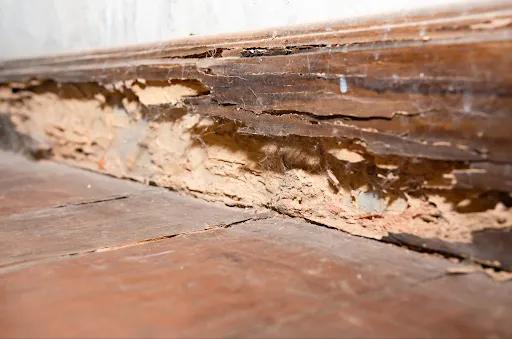
Termite prevention through residential pest control is one of the most important investments a homeowner in Georgia or Tennessee can make — and one of the most commonly deferred until the problem is already visible. By the time termite damage becomes apparent to a homeowner through sagging floors, bubbling paint, or hollow-sounding wood, the infestation has typically been active for months or years. The structural damage that accumulates during that time is real, expensive, and entirely preventable with proactive treatment.
Why Georgia and Tennessee Are High-Risk Markets
Subterranean termites thrive in warm, humid climates with adequate soil moisture — a description that fits most of Georgia and a significant portion of Tennessee with precision. Georgia consistently ranks among the highest-risk states for subterranean termite activity in the country, and the Atlanta metro area and surrounding regions see particularly active termite pressure due to the combination of climate, soil conditions, and the density of older housing stock that may not have been treated in years.
Tennessee's termite risk is concentrated in the western and central portions of the state, with Middle Tennessee and the Nashville corridor seeing meaningful activity that's increased as the climate has warmed gradually over recent decades. Knoxville and Chattanooga area homeowners face similar exposure given the region's temperature profile and moisture patterns.
How Subterranean Termites Actually Operate
Understanding how subterranean termites work makes the case for proactive termite prevention through residential pest control services considerably more concrete. Subterranean termites live in underground colonies that can number in the hundreds of thousands, building mud tube tunnels from the soil up into the wood structures of a home to access cellulose — their food source. Those mud tubes protect them from exposure to air and light while they travel from the colony to the feeding site and back.
This underground entry point is why termite damage is so often discovered late. Termites don't typically announce their presence through visible surface activity early in an infestation — they work from within wood structures, consuming material from the inside out in ways that leave the surface intact until the damage is already severe. By the time homeowners notice the hollow sound when tapping on a baseboard or the slight give in a floor, the colony has been actively feeding for considerably longer than the visible signs would suggest.

What a Termite Inspection Actually Covers
A professional termite inspection is the baseline for any effective termite prevention program. The inspection evaluates the home's current termite status, identifies conducive conditions — wood-to-soil contact, moisture issues, debris near the foundation, inadequate drainage — that make the property more attractive to termite activity, and establishes whether any active infestation is present or whether prevention is the appropriate intervention.
For homes without current activity, the inspection informs the treatment approach needed to establish protection. For homes where activity is already present, it guides the remediation scope before preventive treatment is applied. Either way, the inspection is what makes the treatment plan specific to the property rather than generic.
Soil Treatment and Baiting Systems
The two primary approaches to termite prevention for residential properties are liquid soil treatments and baiting systems, and the right choice depends on the property's specific characteristics, construction type, and the homeowner's preferences around treatment methods.
Liquid soil treatments create a chemical barrier in the soil around the foundation that termites cannot cross without encountering and being affected by the treatment. Applied correctly by a qualified technician, this barrier provides protection that lasts several years before requiring reapplication. Baiting systems use monitoring stations placed in the soil around the perimeter that attract termites and deliver a slow-acting agent back to the colony, eventually eliminating the colony rather than just blocking its access.
Both approaches are legitimate and effective when implemented correctly by professionals with experience in the specific termite pressures present in Georgia and Tennessee markets.
Moisture Control as a Prevention Partner
No termite prevention program is fully complete without addressing the moisture conditions that make a property attractive to termite activity in the first place. Subterranean termites require moisture to survive, which means properties with drainage problems, plumbing leaks near the foundation, inadequate ventilation in crawl spaces, or wood-to-soil contact near the structure are consistently at higher risk than properties where those conditions have been corrected.
Coordinating termite prevention through residential pest control services with basic moisture mitigation measures — fixing grade that directs water toward the foundation, improving crawl space ventilation, eliminating wood debris near the structure — produces significantly better long-term results than chemical treatment alone applied to a property where conducive conditions remain in place.